
Karcher Pressure Washer Manual: A Comprehensive Guide
This guide provides detailed instructions for Karcher pressure washers, covering setup, operation, maintenance, and troubleshooting, ensuring optimal performance and longevity of your cleaning equipment.
Understanding Karcher Pressure Washers
Karcher pressure washers are renowned for their quality, durability, and effectiveness in a wide range of cleaning applications. From compact models ideal for small patios and vehicles to heavy-duty machines for commercial use, Karcher offers a diverse lineup to meet various needs.
These washers utilize high-pressure water streams to dislodge dirt, grime, and debris from surfaces. Understanding the core components – the motor, pump, high-pressure hose, and nozzles – is crucial for proper operation and maintenance. Karcher’s innovative designs often incorporate features like adjustable pressure settings and detergent application systems, enhancing versatility.
Many users appreciate the K2’s portability, while others favor the K3’s horizontal design for stability. Familiarizing yourself with these features, as detailed in your specific model’s manual, will maximize cleaning efficiency and extend the lifespan of your Karcher pressure washer.
Types of Karcher Pressure Washers
Karcher offers a broad spectrum of pressure washers categorized by their power, portability, and intended use. Electric models, like the popular K2 and K3, are ideal for home use, offering convenience and quieter operation. Gas-powered washers deliver higher pressure and flow rates, suitable for demanding tasks and larger areas.
Within these categories, variations exist based on features. Compact units prioritize portability, while horizontal models enhance stability. Some washers include detergent tanks for applying cleaning solutions, and others boast quick-connect accessories for nozzle changes.
The K2 Power Control is a lightweight option, while the K3 Horizontal provides a stable base. Understanding these distinctions, and consulting your manual, ensures you select the right Karcher pressure washer for your specific cleaning requirements and enjoy optimal performance;
Karcher K2 Power Control – Overview
The Karcher K2 Power Control is a compact and lightweight pressure washer designed for light to medium-duty cleaning tasks around the home. It’s particularly well-suited for smaller outdoor spaces and quick cleaning jobs like patios, bikes, and garden furniture.
This model features a variable pressure setting, allowing users to adjust the water pressure to suit different surfaces – a crucial feature for preventing damage. The ‘Dirt Blaster’ nozzle provides concentrated cleaning power for stubborn grime.
Its ease of use and portability make it a popular choice for those seeking a convenient cleaning solution. The K2 Power Control is an excellent entry point into the world of pressure washing, offering effective cleaning without the bulk of larger models.
Karcher K3 Horizontal – Features & Benefits
The Karcher K3 Horizontal Pressure Washer stands out with its space-saving horizontal design, making it ideal for storage in smaller garages or sheds. This model delivers a robust cleaning performance, suitable for patios, garden paths, and vehicle exteriors.
Key features include a high-pressure nozzle and a detergent suction tube for applying cleaning solutions. The K3 boasts a reliable motor and pump system, ensuring consistent performance. Its user-friendly design and quick-connect accessories simplify setup and operation.
Shoppers appreciate its power and compact form factor. The K3 offers a balance between portability and cleaning capability, making it a versatile choice for various outdoor cleaning needs.
Pressure and Flow Rate Explained (PSI & GPM)
Understanding pressure (PSI) and flow rate (GPM) is crucial for effective cleaning with your Karcher pressure washer. PSI, or pounds per square inch, measures the force of the water, determining its ability to lift dirt and grime. Higher PSI generally means more powerful cleaning, ideal for stubborn stains.

GPM, or gallons per minute, indicates the volume of water delivered. A higher GPM allows for faster rinsing and covering larger areas. The combination of PSI and GPM dictates the overall cleaning power.
A balance is key; high PSI with low GPM might struggle to rinse effectively, while low PSI with high GPM may not provide sufficient impact. Karcher washers offer varying PSI and GPM levels to suit different cleaning tasks.
Safety Precautions Before Use

Prioritizing safety is paramount when operating your Karcher pressure washer. Always wear safety glasses to protect your eyes from debris. Closed-toe shoes are essential to prevent foot injuries. Avoid directing the spray at people, animals, or electrical components.
Ensure the power cord is undamaged and properly grounded. Never operate the washer with a damaged cord or if it’s exposed to water. Before connecting to the water supply, verify it meets the pressure requirements.
Be mindful of the high-pressure spray; it can cause serious injury. Never attempt to modify the pressure washer in any way. Always disconnect the power source before performing maintenance or changing accessories. Read the full manual before first use for complete safety guidelines.
Setting Up Your Karcher Pressure Washer
Proper setup is crucial for efficient and safe operation. Begin by selecting a stable, level surface for the washer. Unpack all components and verify everything is present according to the manual’s parts list. Ensure the power switch is in the “off” position before proceeding.

Next, prepare for water connection. Locate the water inlet on the pressure washer. Before attaching the high-pressure hose, ensure it’s securely fastened to both the washer and the spray gun. Double-check all connections to prevent leaks during operation.
Finally, familiarize yourself with the controls. Understand the power button, pressure settings, and detergent application features.
Connecting the Water Supply
A reliable water supply is essential for your Karcher pressure washer’s operation. First, ensure your water source provides a minimum flow rate as specified in your model’s manual – typically around 1.5 gallons per minute. Attach the water inlet adapter to your garden hose, then connect the hose to the pressure washer’s water inlet.
Important considerations: Use a water filter to prevent debris from entering and damaging the pump. Fully open the water tap before switching on the pressure washer. This prevents the pump from running dry, which can cause damage.
Check for leaks at all connection points. If leaks are present, tighten the connections or replace the washers as needed.
Attaching the High-Pressure Hose
Properly attaching the high-pressure hose is crucial for safe and effective operation. Begin by aligning the hose connector with the pressure washer’s high-pressure outlet. Push the connector firmly into the outlet until you hear a distinct click, indicating a secure connection – this utilizes the quick connect system.
Before connecting, inspect the hose for any signs of damage, such as cracks or kinks. Ensure the hose is not twisted or bent sharply, as this can restrict water flow and potentially damage the hose.
Always ensure the trigger gun is released before attaching or detaching the hose to prevent accidental activation. A secure connection is vital to avoid dangerous spray back.
Nozzle Selection and Usage
Karcher pressure washers come with a variety of nozzles, each designed for specific cleaning tasks. Understanding their functions is key to achieving optimal results and preventing damage. The 0-degree nozzle delivers a concentrated, powerful stream for stubborn dirt, but use with extreme caution as it can damage surfaces.
The 15-degree nozzle is ideal for general cleaning, while the 25-degree nozzle is suitable for more delicate surfaces like painted wood. A 40-degree nozzle provides a wider spray pattern for rinsing larger areas.
Always start with a wider angle nozzle and gradually increase the pressure if needed. Test the nozzle on an inconspicuous area first to ensure it doesn’t cause damage.
Using Detergents with Your Karcher Washer
Karcher pressure washers are designed to work with specialized detergents, enhancing cleaning power for various surfaces. Always use detergents specifically formulated for pressure washers to avoid damage to the pump and other components.
The detergent tank, found on many models, allows for easy application of cleaning solutions. Fill the tank with the appropriate detergent and adjust the detergent flow control dial to regulate the mixture.
Mixing ratios vary depending on the detergent and the cleaning task; refer to the detergent packaging for specific instructions. Generally, a lower concentration is sufficient for light cleaning, while a higher concentration is needed for tougher grime.
Detergent Tank and Mixing Ratios
Locating the detergent tank is the first step; it’s typically a translucent container on the pressure washer unit. Always ensure the tank is securely fastened before operation. The tank’s capacity varies by model, influencing how frequently refills are needed during extended cleaning sessions.

Understanding mixing ratios is crucial for effective cleaning and preventing damage. Kärcher detergents often have specific dilution guidelines – for example, a 1:5 ratio might mean one part detergent to five parts water.
Adjusting the detergent flow is usually controlled by a dial. Experimenting with settings allows you to optimize the detergent concentration for different surfaces and levels of dirt. Refer to the detergent label for the recommended ratio and always test in an inconspicuous area first.
Common Problems and Troubleshooting
Encountering issues with your Kärcher pressure washer is common, but many are easily resolved. Low pressure is a frequent complaint; check for kinks in the hose, a clogged nozzle, or insufficient water supply. Ensure the water source provides adequate pressure – a bucket isn’t always sufficient.
If the washer won’t start, first verify the power connection and that the safety lock is engaged. Inspect the thermal overload protection; it may need time to cool down if the unit overheated. A faulty power cord or motor could also be the culprit.
Persistent problems may require professional servicing. Always disconnect the power before attempting any repairs and consult the full manual for detailed troubleshooting steps.
Low Pressure Issues
Reduced cleaning power often stems from simple causes. First, inspect the high-pressure hose for kinks or damage, restricting water flow. Next, examine the nozzle; mineral deposits or debris can significantly reduce pressure. Remove and thoroughly clean the nozzle using a fine wire or the nozzle cleaning tool.
Insufficient water supply is another common factor. Ensure your water source delivers adequate pressure and volume. Avoid using extension cords, as they can cause voltage drop, impacting performance; Check the water inlet filter for blockages and clean it regularly.
Finally, verify the pressure setting on your machine is appropriate for the task. A lower setting will naturally result in reduced pressure.
Washer Won’t Start
If your Karcher pressure washer fails to power on, begin by confirming a stable power supply. Check the outlet with another device to rule out electrical issues. Inspect the power cord for any visible damage, such as cuts or fraying, and replace if necessary. Ensure the power switch is firmly in the “ON” position.
Next, examine the safety latch on the trigger gun. It must be fully engaged for the washer to operate. Verify the water supply is connected and turned on; the unit won’t start without water pressure. Check the thermal overload protection – allow the motor to cool if it has tripped.
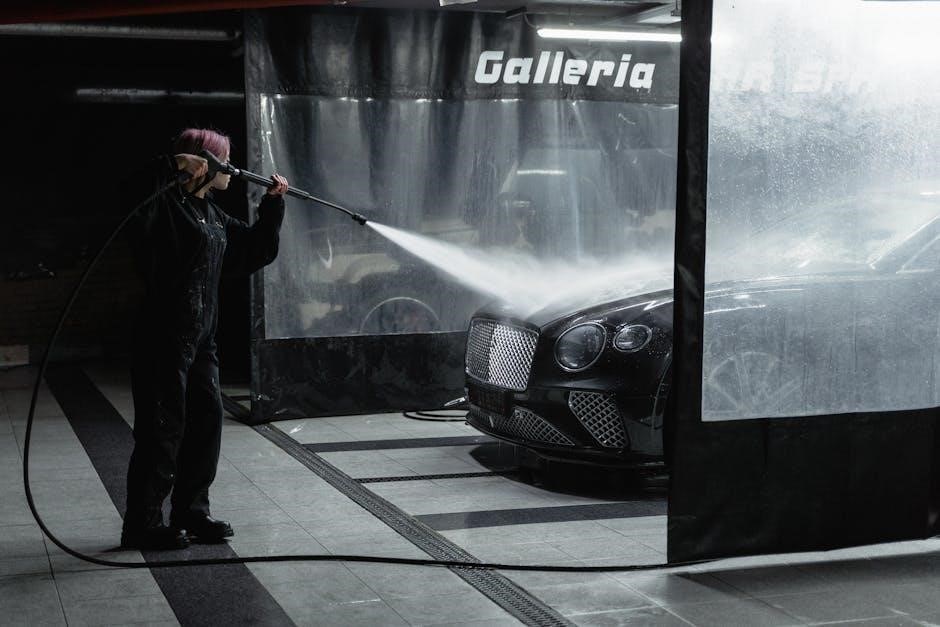
Finally, consult the manual for specific troubleshooting steps related to your model.

Maintaining Your Karcher Pressure Washer
Regular maintenance extends the life of your Karcher pressure washer and ensures optimal performance. After each use, disconnect the water supply and power cord. Flush the detergent tank with clean water to prevent clogging and residue buildup. Inspect the high-pressure hose for kinks, cuts, or abrasions, replacing it if damaged.
Periodically clean the nozzles to remove debris that can reduce pressure and spray pattern quality. Check the water filter and clean or replace it as needed. Store the unit in a frost-free location, especially during winter months, to prevent freezing damage.
Always refer to your Karcher manual for specific maintenance recommendations for your model.
Cleaning the Nozzles
Clogged nozzles significantly reduce pressure and cleaning effectiveness. Regularly inspect your Karcher’s nozzles for mineral deposits or debris buildup. To clean, first, disconnect the nozzle from the wand. Use a thin wire or nozzle cleaning tool – often included with your Karcher – to carefully clear any obstructions from the nozzle’s orifice.
Avoid using sharp objects that could damage the nozzle’s internal components. Soaking the nozzle in white vinegar can help dissolve stubborn mineral deposits. Rinse thoroughly with water after cleaning. Ensure the nozzle is securely reattached before resuming operation.
Properly maintained nozzles guarantee optimal spray patterns and cleaning power.
Winter Storage Preparation
Proper winterization prevents freeze damage to your Karcher pressure washer. First, disconnect the water supply and drain all remaining water from the pump, hose, and wand. Use a pump saver kit – readily available – to circulate antifreeze through the pump, protecting internal components.
Remove detergents from the tank and run clean water through the detergent system to prevent clogging. Store the unit in a frost-free location, ideally indoors. Cover the pressure washer to protect it from dust and debris. Inspect hoses for cracks or damage before storage.
Following these steps ensures your Karcher is ready for spring cleaning.
Understanding the Quick Connect System
Karcher’s quick connect system simplifies nozzle and accessory changes. Locate the quick connect collar on the wand; gently pull it forward, and the existing attachment will release. Align the new nozzle or accessory with the connection point and firmly push it in until it clicks, ensuring a secure fit.
This system eliminates the need for tools, allowing for rapid switching between different cleaning tasks. Always ensure the power is off before changing attachments. Inspect the quick connect collar regularly for wear and tear, replacing it if damaged.
Proper use of the quick connect enhances efficiency and convenience during operation.
Choosing the Right Accessories
Expanding your Karcher’s capabilities is easy with a range of available accessories. Consider a surface cleaner for patios and driveways, significantly reducing cleaning time and providing even results. Rotating brushes are ideal for delicate surfaces like car paint or siding, preventing damage.
Foam cannons enhance detergent application, creating a thick lather for superior cleaning power. Extension wands extend your reach, tackling hard-to-access areas. Drain cleaning kits effectively clear blocked pipes and gutters.
Always verify accessory compatibility with your specific Karcher model. Genuine Karcher accessories ensure optimal performance and longevity.
Where to Find Karcher Manuals Online
Locating your Karcher pressure washer manual is straightforward. The official Karcher website (https://www.kaercher.com/) offers a comprehensive manual database. Navigate to the “Support” or “Manuals” section and search by model number. Model numbers are typically found on the machine’s data plate.
Many third-party websites also archive Karcher manuals, but ensure the source is reputable. ManualsLib and similar sites can be helpful alternatives. Downloading a PDF version allows for easy access and printing.
If you cannot find your specific model, contact Karcher’s customer support for assistance. Having your machine’s serial number will expedite the process.
Karcher Warranty Information
Karcher offers varying warranty periods depending on the pressure washer model and its intended use. Generally, consumer models come with a one to two-year warranty covering defects in materials and workmanship. Commercial or professional models often have shorter warranty durations, reflecting their heavier usage;
The warranty typically covers repair or replacement of defective parts, but doesn’t include wear items like hoses, nozzles, or filters. Proper maintenance, as outlined in the manual, is crucial for warranty validity. Keep your purchase receipt as proof of date.
To make a warranty claim, contact Karcher customer service or an authorized service center. Review the full warranty terms on the Karcher website for specific details and exclusions.
Affiliate Links and Deals on Karcher Products
We participate in affiliate programs, including with Amazon, and may earn a commission from qualifying purchases. These commissions support our website and allow us to continue providing helpful content about Karcher pressure washers. Clicking on our affiliate links won’t increase the price you pay.
Currently, Amazon offers various deals on Karcher models, including the K2, K3, and K4 series. Check for seasonal promotions and discounts, especially during holidays and sales events. Other retailers, like Home Depot and Lowe’s, also frequently feature Karcher products at reduced prices.
We regularly update our deals section with the latest offers. Always compare prices before making a purchase to ensure you’re getting the best value.