

Haydn Trumpet Concerto in E-flat Major: A Comprehensive Guide
Exploring resources reveals readily available Haydn Trumpet Concerto in E-flat Major (H. VIIe:1) PDF scores online.
Numerous websites offer access to this celebrated piece, facilitating study and performance preparation for trumpeters and orchestras alike.
Alison Balsom’s performances, alongside various recordings, demonstrate the concerto’s enduring appeal, while digital tools enhance score accessibility.
Historical Context of the Concerto
Haydn’s Trumpet Concerto in E-flat Major, composed around 1796, emerged during a period of significant change in orchestral instrumentation and trumpet design. Commissioned by Anton Hampl, a Bohemian nobleman and skilled trumpeter, the work wasn’t initially intended for widespread concert performance. Instead, it was crafted to showcase Hampl’s exceptional abilities on a specific type of natural trumpet – one with limited harmonic capabilities.
The late 18th century saw the trumpet primarily functioning as a ceremonial instrument, often relegated to outdoor signals or fanfares. PDF scores available today reveal the concerto’s innovative nature, pushing the boundaries of what was considered possible on the natural trumpet. The concerto’s creation reflects a growing interest in showcasing individual virtuosity within the classical orchestra, a trend that would continue into the Romantic era.
Interestingly, the concerto’s initial popularity waned after Hampl’s death, and it remained largely forgotten for over a century before its rediscovery in the 20th century.
Haydn’s Compositional Period & Influences
Haydn’s Trumpet Concerto falls within his late compositional period, a time marked by increasing experimentation and a refined mastery of form. Having established himself as a leading figure of the Classical era, he was increasingly free to explore new instrumental combinations and stylistic nuances. Accessing PDF scores of the concerto highlights his characteristic clarity of structure and melodic invention.
Influences during this period included the burgeoning galant style, emphasizing elegance and simplicity, and the emerging Sturm und Drang movement, with its heightened emotional intensity. While the concerto doesn’t fully embody the latter, it demonstrates a willingness to push the technical limits of the instrument.
Furthermore, Haydn’s long experience as a court composer, serving the Esterházy family, instilled in him a deep understanding of orchestral color and balance, evident in the concerto’s delicate interplay between soloist and orchestra.
The Original Trumpet & Anton Hampl
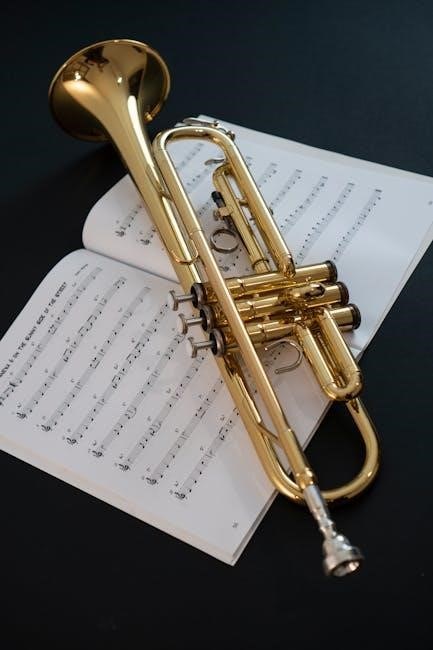
Haydn’s Trumpet Concerto was composed for the keyed trumpet, a relatively new instrument at the time, and specifically for Anton Hampl, a virtuoso trumpeter in the Esterházy orchestra. PDF scores reveal the demands placed upon the performer, showcasing the instrument’s unique capabilities and limitations. The keyed trumpet allowed for chromatic notes previously unavailable on the natural trumpet, expanding the instrument’s melodic range.
Hampl’s exceptional skill prompted Haydn to write a concerto that exploited these new possibilities, while still respecting the instrument’s inherent characteristics. The concerto isn’t merely a display of technical prowess; it’s a beautifully crafted work that integrates the trumpet seamlessly into the orchestral texture.
Understanding Hampl’s abilities is crucial when interpreting the concerto, as Haydn tailored the writing to his specific strengths and the instrument’s evolving potential.
The Concerto’s Rediscovery in the 20th Century
Despite its initial acclaim, Haydn’s Trumpet Concerto fell into relative obscurity after Hampl’s death. The instrument itself became less common, and the concerto was rarely performed. However, the 20th century witnessed a remarkable revival, fueled by renewed interest in historically informed performance practice and the availability of PDF scores.
Scholarly research uncovered the original orchestral parts, and transcriptions for modern trumpets were created, making the work accessible to a wider range of musicians. Recordings, like those featuring Alison Balsom, further popularized the concerto, introducing it to new audiences.
This rediscovery highlighted the concerto’s enduring musical value and its significance within Haydn’s oeuvre, cementing its place in the standard trumpet repertoire.

Musical Analysis
PDF scores reveal Haydn’s masterful structure, showcasing brilliant interplay between soloist and orchestra. The concerto’s form, themes, and virtuosic passages are readily apparent.
Form and Structure of the Concerto
Examining a PDF score of Haydn’s Trumpet Concerto in E-flat Major immediately reveals its three-movement structure – a standard Classical concerto format. The first movement, Allegro, is in sonata form, presenting contrasting themes developed through skillful orchestration. The second movement, Andante, offers a lyrical respite, often showcasing the trumpet’s expressive capabilities in a simpler harmonic setting.
Finally, the third movement, another Allegro, returns to a more energetic character, frequently employing rondo or sonata-rondo form. PDF versions allow detailed analysis of Haydn’s thematic development, harmonic progressions, and the interplay between the solo trumpet and the supporting orchestral textures. The concerto’s concise nature and clear formal divisions contribute to its enduring popularity and accessibility for both performers and listeners.

First Movement: Allegro – Key Themes & Development
Analyzing a PDF score of the Allegro reveals Haydn’s masterful use of thematic material. The movement opens with a bright, energetic theme in E-flat major, immediately establishing a cheerful character. A contrasting second theme, often more lyrical, provides harmonic and melodic variety. The development section, clearly visible in the PDF, skillfully fragments and transforms these themes, exploring different keys and orchestral textures.
Haydn’s orchestration is particularly effective in highlighting the trumpet’s capabilities; The recapitulation restates the initial themes, often with variations, leading to a brilliant coda. Studying the PDF allows tracing the intricate interplay between the solo trumpet and the orchestra, showcasing Haydn’s compositional ingenuity and the concerto’s overall structural coherence.
Second Movement: Andante – Lyrical Qualities & Orchestration
The Andante, readily accessible in a PDF score, presents a striking contrast to the outer movements. It’s characterized by a serene and lyrical melody, beautifully suited to the trumpet’s expressive capabilities. Examining the PDF reveals Haydn’s delicate orchestration, employing muted strings and woodwinds to create a gentle, pastoral atmosphere. The trumpet’s role shifts from virtuosic display to melodic shaping, demanding nuanced phrasing and breath control.
Harmonic simplicity and elegant melodic lines define this movement. The PDF score clearly illustrates the interplay between the solo trumpet and the supporting orchestral textures. Haydn masterfully utilizes dynamics and articulation to enhance the lyrical qualities, offering a moment of repose before the energetic finale.
Third Movement: Allegro – Virtuosity & Finale
The final Allegro, easily studied via a readily available PDF score, explodes with energy and showcases the trumpet’s technical brilliance. This movement demands exceptional agility, range, and stamina from the performer. The PDF reveals Haydn’s intricate writing, filled with rapid scales, arpeggios, and challenging ornamentation. Orchestral support is lively and engaging, creating a festive atmosphere.
Analyzing the PDF score highlights Haydn’s masterful use of thematic development and playful interplay between the soloist and orchestra. The movement culminates in a triumphant and exhilarating conclusion, solidifying the concerto’s overall brilliance. Performers often highlight the movement’s demanding passages, requiring precise articulation and a confident musical voice.
Performance Practice
PDF scores aid informed interpretations; understanding historical context and technique is crucial. Alison Balsom’s recordings offer insights into stylistic nuance and expressive phrasing.
Trumpet Technique & Challenges
Performing Haydn’s Trumpet Concerto presents unique technical hurdles for modern trumpeters, largely stemming from its original conception for the natural trumpet. PDF scores, while invaluable, don’t fully convey the limitations of the instrument Haydn initially wrote for – lacking valves, demanding precise lip control for harmonic series.
Players must master clean articulation, accurate intonation within the natural harmonic range, and efficient breath control to navigate the concerto’s demanding passages. The high register requires exceptional embouchure strength and control. Furthermore, stylistic considerations, informed by historical performance practice, are vital; a modern trumpeter must avoid overly vibrato-laden phrasing, aiming for clarity and elegance. Successfully tackling these challenges requires diligent practice with the PDF score and a deep understanding of the natural trumpet’s capabilities.
Orchestral Considerations & Balance
Successfully performing Haydn’s Trumpet Concerto requires careful attention to orchestral balance, a crucial element often overlooked when solely focusing on the PDF score. The concerto, while showcasing the trumpet, is a dialogue between soloist and orchestra. Historically informed performances emphasize a lighter orchestral texture, allowing the trumpet’s clarity to shine.
Conductors must ensure the strings provide a supportive, yet not overpowering, foundation. Woodwinds should blend seamlessly, avoiding excessive prominence. The continuo section (often cello and double bass) needs precise rhythmic alignment with the soloist. Careful dynamic control throughout the orchestra is paramount. A well-balanced performance, guided by the PDF, creates a captivating interplay, highlighting Haydn’s masterful orchestration and the trumpet’s lyrical and virtuosic capabilities.
Tempo and Interpretation
Interpreting Haydn’s Trumpet Concerto, even with a detailed PDF score, demands nuanced consideration of tempo. While marked Allegro and Andante, strict metronomic adherence can feel rigid. Historically informed performance practice suggests a degree of flexibility, allowing for expressive phrasing and subtle rhythmic variations.
The first movement’s Allegro should be lively but not rushed, permitting clarity of articulation. The second movement’s Andante invites lyrical phrasing and a gentle, flowing tempo. The finale’s Allegro demands brilliance and precision. Studying recordings – like those by Alison Balsom – alongside the PDF, reveals diverse interpretations. Ultimately, a successful performance balances adherence to Haydn’s intent with individual artistic expression, breathing life into the score.
Notable Recordings & Performers (Alison Balsom)
Numerous recordings of Haydn’s Trumpet Concerto exist, offering varied interpretations. Accessing a PDF score alongside these recordings is invaluable for study. Among the most celebrated performers is Alison Balsom, whose 2009 recording is frequently lauded for its technical brilliance and musicality. Her phrasing and tone quality provide a compelling example of the concerto’s expressive potential.
Other notable recordings feature prominent trumpeters showcasing different stylistic approaches. Comparing these interpretations, while referencing the PDF, illuminates the concerto’s interpretive flexibility. Examining the scores alongside performances reveals how artists navigate Haydn’s demands for both virtuosity and elegance. Balsom’s recording remains a benchmark, demonstrating a deep understanding of the work’s character.

Finding and Using PDF Scores
Haydn Trumpet Concerto PDF scores are widely available online, offering convenient access for study and performance. Ensure legality and utilize digital readers for annotation.
Reliable Sources for Haydn Trumpet Concerto PDF Scores
Locating a high-quality Haydn Trumpet Concerto in E-flat Major PDF score requires careful consideration of source reliability. Several online music libraries and repositories offer scores, but verifying their accuracy is crucial. IMSLP (International Music Score Library Project) stands out as a prominent, legally compliant resource, providing public domain scores often meticulously edited.
Additionally, many university music libraries offer digitized scores accessible online, though access may require affiliation or subscription. Commercial music retailers, such as Musicnotes.com or Sheet Music Plus, also sell digital versions, ensuring copyright adherence. Be cautious of unofficial websites offering free downloads, as these may contain errors or infringe on copyright laws. Always prioritize sources known for accuracy and legal compliance to ensure a reliable performance edition.
Legality and Copyright Considerations
Downloading and using a Haydn Trumpet Concerto in E-flat Major PDF score necessitates understanding copyright law. While Joseph Haydn’s compositions are in the public domain due to the expiration of copyright terms, specific editions and arrangements may still be protected. Scores with editorial markings, fingerings, or unique arrangements often carry copyright.
Utilizing resources like IMSLP generally ensures access to public domain editions. However, downloading from unverified sources risks copyright infringement. Purchasing scores from reputable vendors guarantees legal access and supports composers and publishers. Always respect copyright laws and avoid unauthorized distribution of copyrighted materials. Understanding these considerations is vital for ethical and legal music practice.
Digital Score Readers and Annotation Tools
Working with a Haydn Trumpet Concerto in E-flat Major PDF benefits greatly from digital tools. Software like ForScore, Pads, and Newzik offer excellent score viewing capabilities on tablets and computers. These readers allow for page turns, annotations, and setlist creation.
Annotation features are crucial for marking fingerings, dynamics, and phrasing. Tools like Adobe Acrobat and dedicated music annotation apps enable highlighting, adding text notes, and drawing directly onto the PDF. Kiwix, while primarily an offline encyclopedia reader, can also display PDFs. Efficiently preparing a digital score streamlines practice and performance, enhancing musical understanding and execution.
Preparing a PDF Score for Performance
Optimizing a Haydn Trumpet Concerto in E-flat Major PDF for performance requires careful preparation. Ensure the PDF is clear, legible, and properly formatted for your chosen device. Annotate the score with fingerings, dynamics, and phrasing to aid memorization and interpretation.
Consider creating a condensed score with only essential markings to minimize distractions during performance. Digital readers like ForScore allow for custom setlists and annotations. Verify the page turns are smooth and won’t interrupt playing. Back up the PDF to multiple devices as a precaution. A well-prepared score fosters confidence and a polished performance of this classical masterpiece.
The Trumpet in Haydn’s Time
Haydn’s concerto utilized the natural trumpet, limited by harmonic series. PDF scores reveal challenges for players, demanding exceptional lip control and technique within those constraints.
The Natural Trumpet: Limitations and Capabilities
The natural trumpet, prevalent during Haydn’s era, differed significantly from its modern valve-equipped counterpart. Lacking valves, it was restricted to the harmonic series – notes achievable through manipulating embouchure and breath control. PDF scores of the concerto highlight this, demanding precise execution within a limited range.
Players skillfully employed “lipping” techniques to slightly alter pitch, accessing notes between the natural harmonics. However, changing keys required employing different crooks – interchangeable tubing sections – a logistical consideration reflected in performance practice. Despite these limitations, the natural trumpet possessed a brilliant, penetrating tone, ideal for ceremonial and soloistic roles.
Haydn’s concerto masterfully exploits the instrument’s capabilities, showcasing its agility and clarity. The PDF reveals passages designed to highlight the trumpet’s unique timbre and the performer’s virtuosity within the natural harmonic constraints. It’s a testament to both composer and performer.
The Role of the Trumpet in Classical Orchestration
During the Classical period, the trumpet’s orchestral role, as evidenced in Haydn’s concerto PDF scores, was often ceremonial and regal. Typically, it wasn’t a constant presence, but rather deployed for emphatic fanfares, brilliant flourishes, and to punctuate significant moments. Composers like Haydn utilized its bright timbre to add brilliance and grandeur to their works.
The natural trumpet’s harmonic limitations influenced orchestration. Composers frequently wrote in keys that aligned with the instrument’s readily available notes. Haydn’s concerto in E-flat Major is a prime example, capitalizing on the trumpet’s strength in that key. Orchestral writing often supported the trumpet, providing harmonic context and rhythmic drive.
Examining the PDF reveals how Haydn balances the trumpet’s prominence with the overall orchestral texture, creating a dynamic and engaging musical experience. It wasn’t merely a soloistic showcase, but an integrated orchestral voice.
Comparison to Modern Trumpet
Analyzing Haydn’s Trumpet Concerto in E-flat Major PDF highlights the stark contrast between the natural trumpet of his era and the modern valve trumpet. The natural trumpet, lacking valves, was limited to the harmonic series inherent in each open tone. This demanded exceptional lip control and technique from performers, as evidenced in the concerto’s challenging passages.
Modern trumpets, with their valve systems, offer a chromatic range and flexibility unimaginable to Haydn’s contemporaries. While the modern instrument allows for greater ease of execution, it arguably sacrifices some of the unique character and expressive nuance of the natural trumpet.
Studying the PDF score encourages performers to appreciate the constraints faced by early trumpeters and to emulate their artistry, even when utilizing a modern instrument. It’s a reminder of the instrument’s evolution and the enduring brilliance of Haydn’s composition.
Evolution of Trumpet Design
Examining a Haydn Trumpet Concerto in E-flat Major PDF score provides context for understanding the dramatic evolution of trumpet design. The natural trumpet, prevalent during Haydn’s time, was a valveless instrument relying solely on the player’s embouchure and breath control to produce different notes within the harmonic series.
The 19th century witnessed the gradual introduction of valves – initially piston valves, then rotary valves – revolutionizing the instrument’s capabilities. These valves allowed for chromatic playing and expanded the trumpet’s range significantly. Further refinements in metallurgy, bore size, and bell design continued throughout the 20th and 21st centuries.
Comparing the demands of the concerto, as detailed in the PDF, with the capabilities of a modern trumpet illustrates this progression. The natural trumpet’s limitations spurred innovation, ultimately leading to the versatile instrument we know today.
Resources and Further Study
Online databases and libraries offer Haydn Trumpet Concerto PDF scores, alongside books and articles. Kiwix enables offline access to Wikipedia’s related content.
Online Databases and Music Libraries

Numerous online platforms provide access to the Haydn Trumpet Concerto in E-flat Major PDF scores and related scholarly materials. IMSLP (International Music Score Library Project) is a crucial resource, offering public domain scores, often including multiple editions and arrangements of the concerto.
Music libraries, both physical and digital, such as those affiliated with universities and conservatories, frequently hold extensive collections. WorldCat is a global catalog that can help locate scores held in libraries near you.
Subscription-based services like Naxos Music Library and RILM Abstracts (for research articles) can also be valuable, though they require paid access. Exploring these databases reveals performance editions, critical analyses, and historical context surrounding the concerto, aiding in deeper understanding and informed performance practice.
Books and Articles on Haydn and the Trumpet Concerto
Scholarly literature provides in-depth analysis of Haydn’s Trumpet Concerto in E-flat Major, complementing the availability of PDF scores. Books focusing on Haydn’s life and works often dedicate sections to the concerto, exploring its compositional context and stylistic features.
Specialized studies on the Classical trumpet and orchestral practices offer valuable insights into the instrument’s role during Haydn’s time. RILM Abstracts indexes journal articles covering performance practice, historical trumpets, and analyses of the concerto’s form and melodic content.
Biographies of Anton Hampl, the original performer, shed light on the concerto’s genesis and the technical demands placed upon him. These resources, alongside critical editions of the score, enhance understanding beyond simply accessing a PDF.
Wikipedia as a Resource (with Caution)
Wikipedia offers a starting point for researching Haydn’s Trumpet Concerto in E-flat Major, though its information requires careful evaluation. Articles on Haydn, the trumpet, and Classical music provide background context, potentially linking to resources about the concerto itself. However, remember that Wikipedia is collaboratively edited, and accuracy isn’t guaranteed.
Cross-referencing information with scholarly sources is crucial. While Wikipedia might mention the concerto’s history or performance practice, it shouldn’t be relied upon as a primary source for detailed analysis or accessing a PDF score.
Permanent links to revisions allow tracking changes, but always verify information with reputable academic databases and publications before using it for serious study or performance preparation. Be mindful of potential biases or inaccuracies.
Kiwix for Offline Access to Information
Kiwix provides a valuable solution for accessing information about Haydn’s Trumpet Concerto in E-flat Major, even without an internet connection. By downloading Wikipedia’s content as a “zim” file, users can browse articles offline, including those related to Haydn, the trumpet, and Classical music history.
While a direct PDF score download isn’t offered through Kiwix itself, the offline encyclopedia can provide essential background knowledge for understanding the concerto’s context and locating reliable score sources online when connectivity is available.
Kiwix is particularly useful for researchers or musicians working in areas with limited or unreliable internet access, ensuring continuous access to foundational information about the piece.